


All-Decade Single-Season Wins Above Replacement Team: N.L. 1900-1909
July 1, 2010 by Mike Lynch · 4 Comments
When my friend Dan Hirsch turned me on to his fantastic new web site, The Baseball Gauge, not only did I immediately bookmark it and add it to my blogroll, but it’s been open on my browser for about a week now. I just can’t seem to get enough! Dan’s site is all about Win Shares, Wins Above Replacement, and Win Shares Above Bench and has an incredible search engine that allows for all kinds of lists, lineups, etc. such as the one I’m about to write about.
Below is a list of the best seasons posted by National Leaguers at each position during the period from 1900-1909 based on Wins Above Replacement.
| National League |
Potential Batting Order | ||||||
| C | Roger Bresnahan | NYN | 1908 | 6.2 | 1B | Frank Chance | .319/.419/.430, 57 SB |
| 1B | Frank Chance | CHN | 1906 | 8.1 | 3B | Art Devlin | .299/.396/.390, 54 SB |
| 2B | Johnny Evers | CHN | 1908 | 7.0 | SS | Honus Wagner | .354/.415/.542, 308 TB |
| 3B | Art Devlin | NYN | 1906 | 8.7 | CF | Cy Seymour | .377/.429/.559, 325 TB |
| SS | Honus Wagner | PIT | 1908 | 16.0 | RF | Elmer Flick | .333/.399/.500, 270 TB |
| LF | Sherry Magee | PHN | 1907 | 10.6 | LF | Sherry Magee | .328/.396/.455, 85 RBI |
| CF | Cy Seymour | CIN | 1905 | 11.3 | 2B | Johnny Evers | .300/.402/.375, 36 SB |
| RF | Elmer Flick | PHN | 1901 | 8.5 | C | Roger Bresnahan | .283/.401/.359, 83 BB |
| SP | Christy Mathewson | NYN | 1908 | 14.5 | P | Christy Mathewson | .155/.221/.202 |
| SW | Hooks Wiltse | NYN | 1905 | 4.6 | |||
| RP | Cecil Ferguson | NYN | 1906 | 1.1 | Expected R/G | 5.811 | |
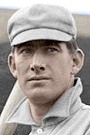 Catcher: Roger Bresnahan—”The Duke of Tralee” became the first catcher elected to the Hall of Fame when he was inducted in 1945 and it’s appropriate for him to be on this team since he was Christy Mathewson’s favorite batterymate. In terms of OPS+, Bresnahan certainly had better seasons than the one he enjoyed in 1908 (he batted .350/.443/.493 in 1903) but in WAR, 1908 and 1906 are his two best seasons. In fact, they’re the two best in the N.L. during the decade. In 1908 Bresnahan established new career highs in games, plate appearances, at-bats, walks and sacrifice hits. Despite this, he was traded to the St. Louis Cardinals a year later and was still above average but spent the remainder of his 17-year career as a part-timer and never reached the level of play he established with the Giants.
Bresnahan is ranked as the 16th best catcher in baseball history by Bill James. “Bresnahan was a throwback to the Irish nineties,” wrote James about the Hall of Fame catcher. “Almost every paragraph written about him seemed to include the adjective ‘fiery.’ He was one of those guys that if you…got on his bad side you’d think he was the Breath of Hell.”
Backup: Johnny Kling—The long time Cubs backstop had the third, fourth and fifth best marks among N.L. catchers from 1900-1909, including 1908 when he posted a WAR of 4.6. He was slightly better behind the plate than Bresnahan, fielding at a .971 clip, allowing .109 passed balls per game and throwing would-be base thieves out 48% of the time (Bresnahan: .971/.132/44%), but he was only average with the bat, recording a 100 OPS+ in 13 seasons. Grantland Rice called him the “smartest catcher in baseball,” and John McGraw once insisted that “nobody could throw better than Kling.”
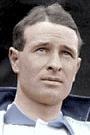 First Base: Frank Chance—Like Bresnahan, Chance also played 17 years in the majors, also had trouble staying in the everyday lineup, and also bounced around from position to position before settling in. He began as a catcher and suffered broken fingers from his days behind the plate, and impaired hearing and excruciating headaches from several beanings he suffered at the plate. Christy Mathewson once wrote that Chance would always take the put-out even if it meant “accepting a pair of spikes in a vital part of his anatomy.”
Because of this, he never amassed 500 at-bats in a season and was through as a regular by the age of 31. But when healthy he was one of the best first basemen of his era. He owns the top four WAR marks among N.L. first sackers during the decade, with 1906 being his best season at 8.1. He paced the senior circuit in runs with 103 and stolen bases with 57, and set new career highs in runs, hits, total bases and sacrifices. “Husk” was inducted into the Hall of Fame in 1946.
Backup: Ed Konetchy—Konetchy remains one of the more underrated players in baseball, mostly because he didn’t do any one thing especially well at the plate, but he did several things well enough to have a pretty good 15-year career, and he’s considered to be the best defensive first baseman of his era (James rates him as an A- in Win Shares). He never drove in or scored 100 runs in any of his 15 seasons, led his league in only three categories—games twice, and doubles and total bases once each—finished with just under 1,000 RBIs and just under 1,000 runs, and didn’t reach any significant milestones. Still, he ranks 15th in career triples with 182 and has a career OPS+ of 122.
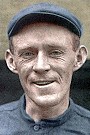 Second Base: Johnny Evers—Another member of the Chicago Cubs infield and one-third of the legendary Tinker-to-Evers-to-Chance double play triumvirate, Johnny Evers edged Giants second sacker “Laughing Larry” Doyle for keystone honors. Although “The Crab” posted better numbers in each offensive category at different times in his 18-year career, 1908 was his best in terms of WAR (7.0), Win Shares (28.8), Win Shares Above Bench (19.2) and OPS+ (144). Thank God Joe Tinker didn’t make this team. Evers and Tinker couldn’t stand each other and went years without speaking, and Chance once said of Evers, “I wish I had been an outfielder so I wouldn’t have to listen to him.” One reporter called him a “keen little umpire-fighting bundle of nerves,” and Hugh Fullerton once wrote that Evers was made up of “a lot of woven wire muscles, and the quickest brain in baseball.” They didn’t call him “the Crab” for nothing.
Backup: Larry Doyle—The antithesis of Evers, Doyle was once described by sportswriter John Foster as being “one of the happiest and best natured players who graced the national game with his sunshine and goodwill to men.” He was also a gamer, “a hustling, aggressive, McGraw style of player, full of nerve, grit and true courage,” wrote Hugh Fullerton in 1912. Apparently by 1919, Doyle had run out of goodwill; he punched out a fan in Cincinnati prior to that season’s opener. Regardless, he was a very good player who won a batting title in 1915, and led the senior circuit in hits twice, and doubles and triples once each. That 1915 season was his best in terms of WAR, WS, WSAB, and he posted his best OPS+ in 1911, but he’s the backup on this team thanks to his 1909 campaign.
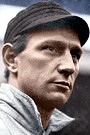 Third Base: Art Devlin—In the closest battle for a position on this club, Art Devlin narrowly edged Cincinnati’s Hans Lobert, 8.7 to 8.5 for the starting berth. Though Matt Williams and Freddy Lindstrom are considered the two best third basemen in New York/San Francisco Giants history, Rob Neyer insists that Devlin has gotten lost in the shuffle—”[he was] a speedy hitter with an outstanding glove.” Frank Graham called Devlin “the greatest third baseman ever to wear a Giant uniform.” Devlin, another Deadball Era player who liked to settle scores with his fists, played only 10 seasons in the majors and in terms of WAR, WS (35.4), WSAB (23.5) and OPS+ (143) 1906 was definitely his best. He established career highs in several offensive categories, including hits, doubles, triples, homers, walks, batting average, on-base percentage, slugging, OPS and hit by pitch.
Backup: Hans Lobert—Mostly known for his speed, Lobert was a good player during his 14 seasons in the bigs, finishing with a career OPS+ of 109. But he was never better than in 1908 when he posted a WAR of 8.5, earned 31.9 Win Shares and had 18.5 Win Shares Above Bench. In no other season was his WAR higher than 3.9 and his second best WSAB was 8.3 in 1913. Lobert stole 316 bases during his career and averaged 39 per 162 games. He also once held the record for circling the bases the fastest at 13.8 seconds, and raced a horse around the bags, barely losing and only because the horse bumped him between second and third.  “I still think I would have won if I hadn’t been practically bowled over at shortstop,” Lobert insisted years later.
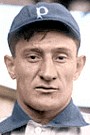 Shortstop: Honus Wagner—This just in, Honus Wagner was really, really good. Not only does he own the top WAR among National League shortstops from 1900-1909, but he owns all of them. He also owns the top mark among right fielders. That’s right, the Hall of Fame shortstop recorded a career-high 1.007 OPS in 1900 while playing 118 games in right field for a WAR of 10.2. But because I can’t have one player manning two positions, right field went to runner-up Elmer Flick instead. And, during the decade, Wagner owns the top four marks among all position players regardless of league or position. Only Ty Cobb and Nap Lajoie, both at 12.3, were able to break Wagner’s dominance in the category. Did I mention he was really, really good?
Backup: You’re kidding, right?
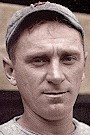 Left Field: Sherry Magee—In keeping with the theme of players who had difficulty keeping their tempers in check, I introduce you to one Sherwood “Sherry” Magee, who once assaulted an umpire while arguing a called third strike and drew a five-week suspension from then N.L. president Thomas Lynch. Magee was an excellent player, who racked up 80.7 WAR in 16 seasons, which ranks 71st all time and is only slightly behind Hall of Famers Arky Vaughn, Rod Carew and Carl Yastrzemski. He led the loop in RBIs four times, and slugging and total bases twice, and finished with a career OPS+ of 136. He was also named the starting left fielder on Rob Neyer’s All-Time Phillies team and Bill James has him ranked 21st among all left fielders in his New Historical Abstract.
Backup: Jesse Burkett—Another hard fighter nicknamed “The Crab,” Burkett had thin skin and had a hard time taking a joke, which often led to altercations with the fans, with whom Burkett would often socialize during games. He was once tossed from both games of a doubleheader and cost his Cleveland Spiders the first game, which was forfeited to Louisville when he refused to leave the field. He had a great career during which he batted .338, including .408 over 265 games from 1895-1896, and finished with 2,850 hits, only 150 shy of 3,000 over his 16-year stint in the majors. James lists Burkett as the 14th best left fielder of all time and his WAR of 9.7 for the 1901 Cardinals is second in the N.L. only to Magee.
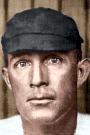 Center Field: Cy Seymour—Among regulars, only Wagner had a higher single-season WAR during the decade than did Cy Seymour in 1905. Roy Thomas and Ginger Beaumont were the top two N.L. center fielders in terms of WAR during the decade but they played all 10 seasons and Seymour didn’t (he was a pitcher and right fielder before moving to center), and “Turkey Mike” Donlin had a better seasonal average than Seymour. But this is about single-season performances.
Seymour was a very good hitter and finished his 16-year career with a .303 average and an OPS+ of 119, but 1905 sticks out like a sore thumb when compared to the rest of his career. He won the batting title at .377 and led the league in hits, doubles, triples, RBIs, slugging, OPS, OPS+ and total bases. Never in his 15 other seasons did he lead the league in any category, and never did he come close to matching the numbers he posted in ’05. Regardless, that campaign was easily good enough for him to be the starting center fielder on this team.
Backup: Mike Donlin—On a roster full of gentlemen who liked to settle arguments with their fists, Donlin may be King. In 1902 Donlin brutally beat a woman he was rumored to be involved with and her escort on a Baltimore street, knocking her unconscious and giving him two black eyes. He claimed he was so drunk that he didn’t know what he was doing. He was fined $250 and sentenced to six months in jail. He was suspended a handful of times by the Reds in 1904, mostly because of his excessive drinking. He pulled a gun on a train steward in 1905, and was involved in several fights with players and spectators in 1908.
But what he wasn’t hitting with his fists he was hitting with his bat; he finished his 12-year career with a .333 average and slugged .468, behind only Honus Wagner in the latter among National Leaguers during the 15 seasons from 1899-1914. After joining the Giants in 1904, Donlin gave John McGraw his best and led the league in runs scored in 1905 with 124, and racked up a career-best 37.6 Win Shares.
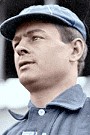 Right Field: Elmer Flick—Flick spent only four of his 13 seasons in the National League, but they were four great seasons and it’s his 1901 campaign that earns him a spot on this team. From 1898-1901 Flick batted .338 for the Phillies and posted an OPS+ of 156, and he paced the league in RBIs in 1900 with 110. Interestingly, he had better years in terms of Win Shares and WSAB, but his 8.5 WAR in ’01 was a career best. After jumping to the Philadelphia Athletics in 1902, Flick landed with the Cleveland Indians (nee Bronchos and eventually Naps) when an injunction filed by the Phillies against previous jumpers Nap Lajoie, Bill Bernhard and Chick Fraser forced Ban Johnson to act quickly and have their contracts transferred from Philadelphia to Cleveland. Fraser returned to the senior circuit but Flick, Lajoie and Bernhard remained in the American League.
Flick wasn’t as good in the A.L. as he was in the N.L., batting .299 with a 144 OPS+ in nine seasons, but he won a batting title in 1905 and led the junior circuit in triples three times, steals twice, and games, plate appearances, at-bats, runs, average, slugging, OPS and OPS+ once each. Were it not for a debilitating stomach ailment that hampered his career from 1908-1910 and eventually ended it, Flick might have had an even more distinguished career.
Backup: Mike Donlin—See above.
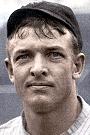 Starting Pitcher: Christy Mathewson—”Mathewson was golden, tall, and handsome, kind and educated, our beau ideal, the first all-American boy to emerge from the field of play,” wrote Frank Deford in The Old Ball Game. For a time, Walter Johnson and Christy Mathewson were 1A and 1B when debating the greatest pitcher of all time. Johnson is still considered arguably the best ever while Christy has fallen behind the likes of Lefty Grove, Pete Alexander, Cy Young, Warren Spahn, and Tom Seaver, and maybe even Roger Clemens and Greg Maddux.
Regardless, he was the National League’s best hurler of the decade in question and owns the top four WAR marks and six of the top 10. During his stellar career, he had higher winning percentages, lower ERAs, more strikeouts and better ERA+s than in 1908, but he never had a more complete season. He went 37-11 in ’08 with a league-leading 1.43 ERA and paced the senior circuit in wins, ERA, games, games started, complete games, shutouts, saves, innings, strikeouts, ERA+, WHIP, BB/9 and K/BB ratio. His greatest achievement, however, may be keeping the rest of his All-Decade WAR teammates in line.
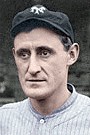 Swing Man: Hooks Wiltse—Wiltse spent 11 seasons with the Giants before finishing his career with a brief stint in the Federal League and he was very good, going 139-90 with a career ERA of 2.47. He appeared in 357 games, starting 226 of them and relieving in 131 of the rest. In 1905 Wiltse made 19 starts and 13 relief appearances and went 15-6 with a 2.47 ERA. His best season came in 1909 when he went 20-11 with a 2.00 ERA and a 127 ERA+ pitching mostly as a starter, and he earned a career-high 24.9 Win Shares in 1908 when he went 23-14 with a 2.24 ERA, but it’s his 1905 season spent shuffling between the rotation and the bullpen that earns him a place on this team.
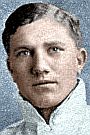 Relief Pitcher: Cecil Ferguson—Considering the number of Giants on this team, it’s amazing they didn’t win more than two pennants and one World Series during the decade. Ferguson debuted with the Giants in 1906 and became the team’s closer, such that it was. He appeared in 22 games, 21 in relief, led the league in games finished and saves with 7, and in his only start of the season tossed a one-hit, 2-0 shutout at the St. Louis Cardinals in October. Ferguson was very good again in 1907, posting a 2.11 ERA in 15 appearances, but was traded to the Boston Braves (nee Doves) at the end of the season and finished his six-year career in Boston. Unfortunately things did not go well; he led the league in losses in 1909 after going 5-23 and was out of the majors within two years.
Overview
With seven Hall of Famers, six of whom are starters, this is a pretty stout squad, and you sure as hell wouldn’t want to get into a bench-clearing brawl with them. Even Flick, who was considered mild-mannered by comparison, once took on his much larger teammate Nap Lajoie and won the fight when Lajoie broke his thumb. According to Baseball Musings’ Lineup Analysis tool, my preferred lineup is not the most productive in terms of runs scored, but its suggestion for the most productive lineup (5.879 runs per game) wasn’t to my liking, mostly because it had Mathewson batting sixth, with Evers, Devlin and Bresnahan hitting seventh, eighth and ninth.
It’s also interesting to note that seven members of this squad either became managers or acted as player/manager during their careers and, as a group, they were very good, posting a .530 winning percentage in 2,662 games and winning four pennants and two World Series titles. But almost all of the credit goes to Frank Chance, “The Peerless Leader,” who accounted for more than half of the 1,411 victories and all of the postseason honors. Remove him from the equation and the rest of the group is far from impressive, posting a winning percentage of only .427 over 1,505 games.
Next up: All-Decade Single-Season Wins Above Replacement Team: A.L. 1901-1909
Mike Lynch is the author of Harry Frazee, Ban Johnson and the Feud That Nearly Destroyed the American League and It Ain’t So: A Might-Have-Been History of the White Sox in 1919 and Beyond, and the founder of Seamheads.com.


Buck Ewing was the first catcher elected to the Hall of Fame, in 1939.
Also, Ferguson wasn’t the Giants closer, he was a mop-up man. He only pitched when they were way ahead or way behind.
Thanks, Cliff. When I checked “Baseball: The Biographical Encyclopedia” it listed Bresnahan as the first catcher elected to the HOF. Interestingly, the same book claims that Ewing was the first catcher elected to the Hall of Fame, which you and the official HOF site just corroborated. Secondly, I assumed Ferguson was the Giants “closer” because of his seven saves in 22 games. Thanks for the clarification.
Mike,
I also recently found Baseballgauge and found it fantastic. Thanks for this detailed work..I am assuming you have settled upon WAR as your performance metric of choice…correct?
Good job,
Mark
Mark,
You’re very welcome. I’m looking forward to doing the A.L. next, then it’s on to the next decade. I decided on WAR mostly because most people, or so it seems, use Win Shares and I wanted to be different. I also found that WAR is becoming the metric of choice for a lot of people. Frankly I don’t know enough about these “newfangled” stats to know whether one is better than the other. :-)
Mike